
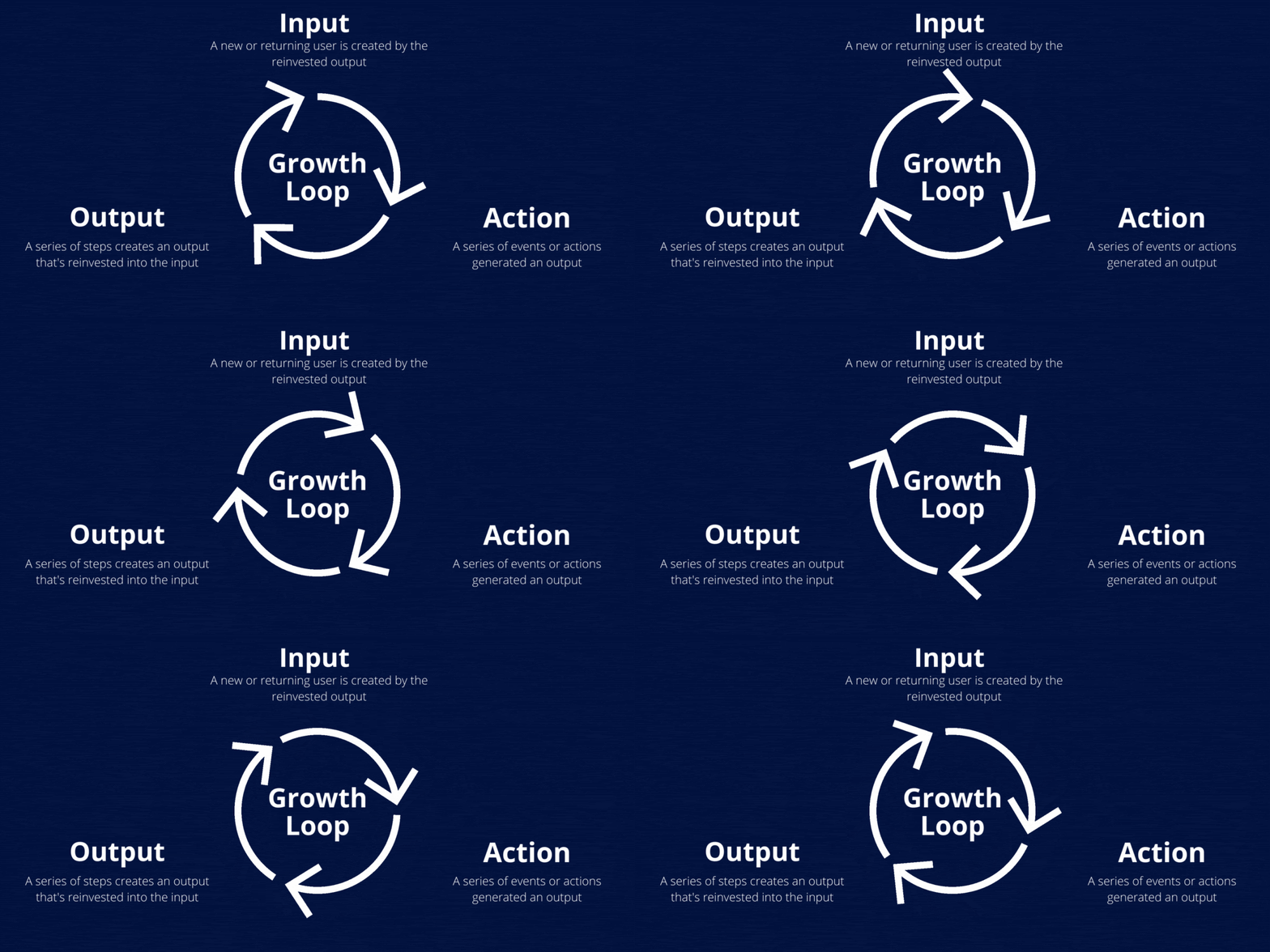
Funnels end.
Loops don’t.
Traditional marketing funnels move users from awareness to conversion and stop there.
But the companies that grow the fastest build systems where every new customer helps bring the next one.
That’s a growth loop.
1. What’s a Growth Loop?
A growth loop is a system where the output of one cycle feeds the next, creating compounding growth instead of linear results.
Unlike a funnel, which “leaks” at every stage, a loop keeps value circulating inside the system.
Example:
A user signs up for your product →
They invite others (referral) or create content →
That content attracts new users →
Those users repeat the process.
Each cycle strengthens the next - no paid ads required to restart momentum.
2. Why Funnels Fail and Loops Scale
Funnels rely on continuous input: more ads, more budget, more leads.
When you stop spending, growth stops.
Loops, on the other hand, build momentum.
They use customer actions, data and satisfaction to fuel further growth.
That’s why companies like Dropbox, Airbnb and Notion scale exponentially: every new user becomes part of the acquisition engine.
In short:
Funnels drive transactions.
Loops drive systems.
3. The Four Types of Growth Loops
1️⃣ Viral Loops - users bring other users (referrals, invites).
2️⃣ Content Loops - content attracts audience → audience amplifies content.
3️⃣ Product Loops - the product experience itself creates retention and advocacy.
4️⃣ Sales/CRM Loops - every deal generates insights and upsells for the next.
The most powerful companies combine them.
4. How to Build Your First Growth Loop
Start simple - with one repeatable process that produces measurable value.
Framework:
Identify a repeatable customer action (referral, review, content).
Track its direct impact on new acquisition or retention.
Automate where possible (CRM, email triggers, incentives).
Measure loop velocity - how fast does one user create another?
If you can measure it, you can optimise it.
If you can optimise it, you can scale it.
At InGrowth, we help brands move from campaigns to systems: designing growth loops that compound results over time.
Because real growth isn’t built on spending more.
It’s built on creating value that circulates.